Ancient Sources, Modern Lens·Cornerstone
Ancient Texts on Vital Energy: A Reader’s Guide
A reader’s guide to the primary sources on qi, prana and pneuma: dates, what each text says, and why standard translations distort it.
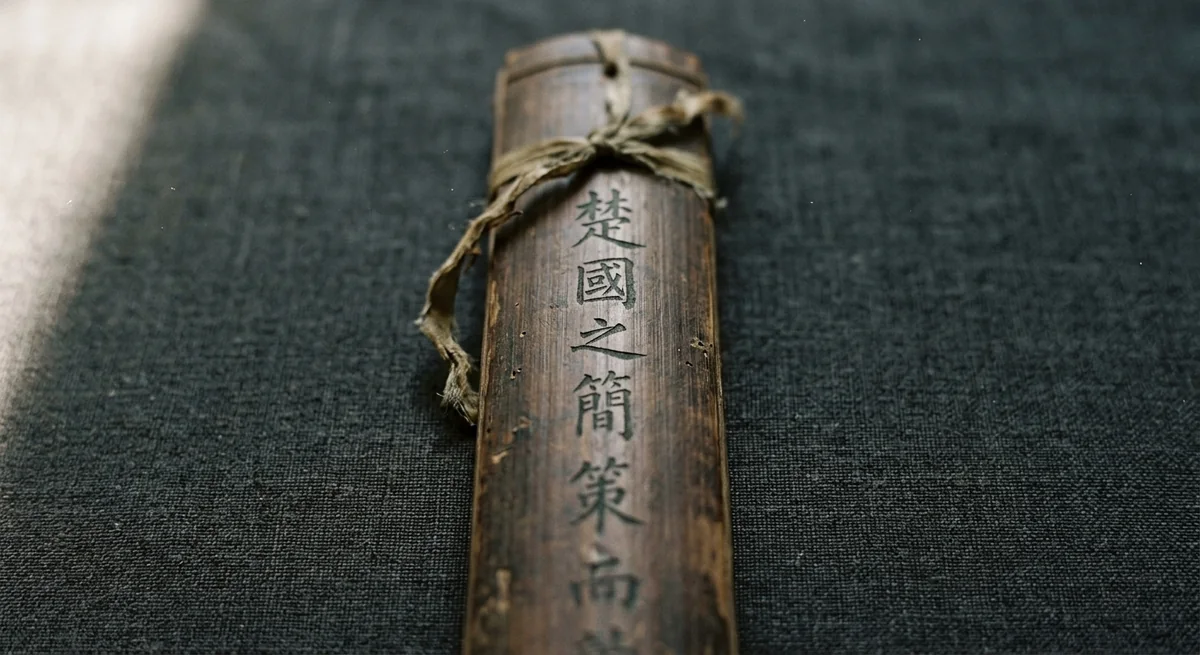
Almost everything written in English about qi, prana, or pneuma is written at second hand. A modern author paraphrases an earlier one, who was working from a translation made in a period with its own assumptions about what “vital energy” ought to mean. Four or five iterations later, the original texts have become a rumour about themselves.
This is a guide to the sources themselves. Each entry gives the date, the textual situation, what the text is actually doing, and where the standard reading goes wrong. Individual passages, with commentary, live in the linked pages.
I should say what I am not. I am not a philologist, and I do not read classical Chinese, Akkadian, or Sanskrit. I work from scholarly editions and multiple translations, comparing them where they diverge, and I flag disagreement rather than pick whichever rendering suits my argument. Where a scholar’s reading and mine differ, I say so and give theirs. Anyone doing serious work here should go to the specialists I cite, not to me.
Why the translations matter more than usual
One example carries most of the weight.
The character 氣 (qi) has been rendered into English as energy, vital force, breath, vapour, pneuma, life-force, and material force. These are not stylistic variants. They commit the reader to different metaphysics.
Energy imports a nineteenth-century physical concept with a conservation law and a unit of measurement, none of which the classical texts have. Vital force imports vitalism, a specific European biological doctrine that was tested and abandoned. Breath is closer to the etymology but too narrow. Material force, the choice of several sinologists, is defensible but reads as jargon.
The rendering I argue for across this site is organization, or the flow of organization. I make the case in What Is Chi?. It is an interpretive choice, not a neutral one. The point of this guide is that you can evaluate the choice yourself if you can see what the texts say.
The Chinese sources
Neiye (內業), “Inward Training”
Date: roughly 4th century BCE. Situation: a short text preserved as a chapter of the Guanzi, a compilation of much later date.
The Neiye is probably the oldest surviving Chinese text on inner cultivation, and it predates most of what people assume it depends on. It is not Daoist in any institutional sense; it is earlier than that category. It is not medical.
What it describes is a practice: stillness, regulated breathing, alignment of posture and mind, and the resulting condition in which qi becomes stable and abundant. Qi in the Neiye is not something you acquire. It is a condition you fall out of and can return to. The vocabulary is about ordering, aligning, and settling.
Harold Roth’s critical edition and study is the standard scholarly reference. Anyone serious should start there.
Mencius (孟子), Book 2A
Date: 4th century BCE. Situation: well-attested, central Confucian text.
The relevant passage introduces haoran zhi qi (浩然之氣), usually “flood-like qi” or “vast, flowing qi.” Mencius says it is difficult to describe, that it fills the space between heaven and earth, and, critically, that it is generated by accumulated rightness and dissipates when one acts against conscience.
This is the passage that most clearly breaks the energy reading. Nothing that behaves like a physical quantity is produced by moral conduct. Whatever Mencius is describing, it is a state of integration between action, intention, and character. That it is described in the same vocabulary as bodily vitality is the interesting fact, not a confusion to be corrected.
Huangdi Neijing (黃帝內經), “Inner Canon of the Yellow Emperor”
Date: compiled roughly 2nd century BCE to 2nd century CE, with later editing. Situation: two parts, the Suwen (Basic Questions) and the Lingshu (Spiritual Pivot). A composite text with multiple authorial layers, not a single work.
This is the foundational medical text and the source of the channel system that later became “meridians” in English. It is also the most misread text in this guide, in both directions, cited as anatomical proof by enthusiasts and dismissed as pre-scientific error by critics.
Read as functional description rather than anatomy, it is doing something recognizable: mapping which regions of the body are coupled to which, how influence propagates, and what a disturbance in one place predicts elsewhere. That is a dependency map. Whether it is an accurate one is a separate question from what kind of thing it is.
The composite authorship matters, because the text is not internally consistent and quoting one line as “what Chinese medicine says” is usually an error.
→ Read the Huangdi Neijing guide
Beyond China
Enūma Eliš
Date: second millennium BCE, Babylonian. Situation: surviving on tablets, well studied. The Oxford ETCSL corpus and standard Akkadian editions are the reference points.
This is not a text about vital energy. It is here for a structural rather than a doctrinal reason. It describes the emergence of ordered cosmos from an undifferentiated state: not creation from nothing, but differentiation, the imposition of boundary and structure on something that previously had none.
That is a description of a transition, and it is the same shape of transition that shows up in the physics of self-organizing systems. I include it because it establishes that the intuition (order is something that emerges from and against an unstructured background) is old, widespread, and not specifically Chinese.
→ Read the Enūma Eliš guide
Pneuma, prana, and the breath traditions
Greek: pneuma in Stoic physics is an active, tensile principle pervading matter and giving it coherence. Closer to a field concept than to a substance, and closer to qi than the usual translation “spirit” suggests.
Indian: prana in the Upanishads and later yogic texts is tied to breath but not identical with it. It is subdivided into functional categories that behave more like process descriptions than fluids.
Contemplative practice: the Hesychast tradition in Eastern Christianity and several Sufi lineages both developed breath-linked attentional practices, independently in origin and with entirely different theological commitments.
I gather these rather than treat them individually, and the grouping is itself a claim I want to flag as mine.
→ Read the breath traditions overview
A note on the translations here
Renderings on this site are my own, produced by comparison across published scholarly translations, with the divergences noted. They are working translations for a philosophical argument, not critical editions. Where the argument depends on a contested rendering, I say so and give the alternatives.
These texts are the historical half of the argument. The other half is contemporary: what systems science says about how organization accumulates, and what bioelectric research has found about information in living tissue. The Learning Earth is the attempt to hold both without collapsing either into the other.
More in this pillar
- The Neiye (Inward Training): Translation and Commentary
- Mencius and Haoran Zhi Qi: The “Flood-Like Qi”
- The *Huangdi Neijing*: Inner Canon of the Yellow Emperor
- Huangdi Neijing — Suwen 1–5: An Expanded Reading
- The Convergence Asymmetry: Good Observers, Bad Theorists
- The Tradition That Diagnosed Its Own Damage
- Why the Right Posture Feels Wrong
- Seven Points on the Ground
- The Body Is Not Given, It Is Made
- The Second Arrow
- Tumah Is Not Dirt
- The Past Is in Front
- Enūma Eliš and the Emergence of OrderComing soon
- Pneuma, Prana and the Breath TraditionsComing soon
The other pillars
Be first to know
The book is in its final editing stage. Leave your email and you will hear when it is ready.