Traditions of the Body·Essay
The Body Is Not Given, It Is Made
Where most traditions drew a map of what is inside a body, Western Amazonia built a procedure for constructing one instead — the Shipibo dieta.
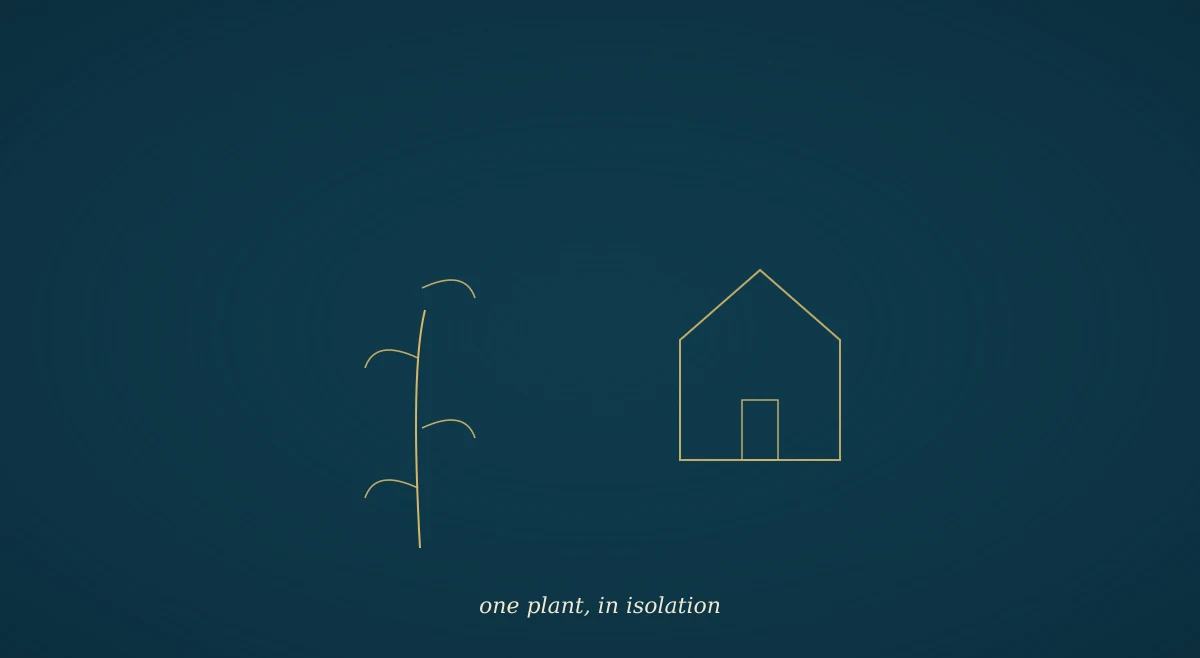
Thirteen traditions drew a map of what is inside a body. Western Amazonia built a procedure for constructing one instead.
Across the comparative studies I have undertaken on how world traditions conceptualise the human body, a near-universal pattern appeared: each one produced an anatomy. Channels, centres, winds, humors, drops, subtle vessels. A diagram of hidden structure, asserted with confidence and incompatible with every other tradition’s diagram.
Western Amazonian systems largely did not do this.
There is no indigenous chakra equivalent, no meridian network, no set of named interior centres to be opened in sequence. What these systems have instead is a procedure, and the procedure is for building a body that can do something the ordinary one cannot.
The dieta
In Spanish, dieta (“diet,” but in this context “the diet” — a technical term for the whole retreat regime, not just the food); samá and cognate terms in the indigenous languages (notably in Shipibo-Konibo, the Panoan language of the main river-dwelling people of the Peruvian Ucayali basin, who have the most elaborated form of this training). It is the central training institution of the region, and the thing most reliably omitted from Western versions of this material.
Isolation in a forest hut, for weeks, months, or years, with:
- Severely restricted food — typically plantain, rice, small fish. No salt, no sugar, no fat, no chilli.
- Strict sexual abstinence.
- Minimal human contact.
- Avoidance of strong smells, sounds, lights.
- And the regular ingestion of one specific plant.
The plants are rao in Shipibo (the generic word for a plant with teaching power), plantas maestras in Spanish (“teacher plants”) — dozens of species, each held to have its own character and its own teaching. Ajo sacha, chiric sanango, bobinsana, piñón blanco, chuchuhuasi, tobacco, the ayahuasca vine itself (Banisteriopsis caapi — the woody vine that gives its name to the brew that pairs it with Psychotria viridis leaves to produce the orally active DMT drink central to the region’s shamanism).
And the rule that organises everything:
One plant at a time.
No combining, no parallel diets. The reason given is explicit and follows from the rest of the system: plants are subjects with volition, and two at once conflict — each one “cuts” the other. Salt, sugar, fat and sex are treated the same way, as strong presences that cancel the diet.
The dieta also ends by ritual rather than simply stopping. Breaking it incorrectly is held to void or reverse the result.
The logic, which is the part that matters
The dieta is not purification and not an endurance test. It is body construction.
You are not learning information. You are building a body capable of standing in relation to the plant.
This follows directly from the premise underneath these systems: if the kind of body you have determines what you are able to perceive, then acquiring a new perceptual capacity requires changing the body — and bodies are changed by what you eat, whom you touch, and what you abstain from.
It is not mysticism bolted onto an anatomy. It is one theory, applied.
Which is also why the training of an onanya (the Shipibo term for a healer or “one who knows” — the local equivalent of what English usually calls a “shaman”) is measured in years of isolation and deprivation. Whatever one thinks of the content, the term has a unit of measurement in this tradition, and the unit is not the weekend.
Why this is the interesting case
The other traditions in the comparative set are each exposed to the same objection: they assert an interior structure that does not correspond to anatomy, and the assertions contradict each other across traditions and drift within them.
This one is not exposed to that objection, because it never made the claim. There is nothing to falsify in a procedure for making a person able to do something. Either the training produces practitioners who can do what the tradition says they can do, or it does not, and that is a different kind of question than whether a channel exists.
It also inverts an assumption so deep in the Western frame that it is hard to see: that knowledge is information, which can be transmitted to any sufficiently attentive mind. Here knowledge is a capacity, and a capacity requires a differently constituted body, and bodies take years.
That is an idea worth having even if everything around it is false.
What I am not claiming
Five limits, and they are substantial.
The theory behind it is contested anthropology, not established fact. The perspectivist framework — Viveiros de Castro’s account (the Brazilian anthropologist Eduardo Viveiros de Castro, in a widely-cited 1998 paper, proposed that Amerindian ontologies invert the Western one: bodies are the thing that differs between species, while interiority — a kind of common human-like soul — is shared) is an interpretive model built by anthropologists. It is influential, it is disputed by other Amazonianists, and it should be labelled as theory everywhere it appears, including in my own account.
“No map” may partly be an artefact of orality. These are not textual traditions. The absence of a written anatomy is not proof of the absence of a conceptual one, and I am partly observing what survives in the ethnographic record rather than what people held.
There is an ordinary mechanism available. Prolonged isolation, severe caloric and sensory restriction, disrupted sleep, and regular ingestion of pharmacologically active plants is a well-understood route to altered perception. Saying so explains how the training produces its characteristic experiences. It does not validate the account the tradition gives of them, and it does not refute the account either — it just means the experiences are not themselves evidence.
Some of the plants are dangerous. Toé (Brugmansia — the genus of large white trumpet-flower shrubs cultivated across the Amazon, whose seeds and leaves contain scopolamine and atropine) is the clear case: a tropane deliriant, poorly dose-controlled in practice, with a record of serious harm including deaths among foreign visitors. “Teacher plant” is a category in the tradition, not a safety rating.
And much of what is practised now is reconstruction. The region lost on the order of ninety per cent of its population after contact. Lineages broke. The current ayahuasca economy, with foreign clients paying for short retreats, has reshaped both the practice and what practitioners say about it — including, in some cases, supplying the chakra language that the tradition did not originally have.
The residue
Strip all of that away and one structural observation survives, which is why the case is worth writing about at all.
The other traditions in the comparative set answered the question what is inside a body? and produced many incompatible answers, none of which held up.
This one did not ask that question. It asked what has to happen to a body before it can do this? — and answered with a schedule: this food, this long, alone, one plant, ended properly.
The first kind of claim has been tested and failed. The second kind is still, in principle, testable, and almost nobody has tried.
Sources
- Viveiros de Castro E. Cosmological deixis and Amerindian perspectivism. Journal of the Royal Anthropological Institute 4(3): 469–488, 1998. (The theory, labelled as such.)
- Ethnographic literature on Shipibo-Konibo dieta and onanya training; Beyer S. Singing to the Plants: A Guide to Mestizo Shamanism in the Upper Amazon. University of New Mexico Press, 2009.
- On Brugmansia toxicity: the clinical literature on tropane alkaloid poisoning.
- On population collapse and its consequences for lineage continuity: the standard demographic histories of post-contact Amazonia.
Related essays in this section: The Convergence Asymmetry — on where this tradition sits relative to the others that did draw hidden anatomy · Why the Right Posture Feels Wrong — a different route to the same claim, that the body is a system that has to be rebuilt rather than read · Traditions of the Body.
← Back to the Traditions of the Body guide
More in this pillar
- The Convergence Asymmetry
- The Tradition That Diagnosed Its Own Damage
- Why the Right Posture Feels Wrong
- Seven Points on the Ground
- The Second Arrow
- Tumah Is Not Dirt
- The Past Is in Front
- Yin, Yang and the Chinese Body: A Complete Guide
- Indian Body-Knowledge: Prana, Nadis, and the Yogic BodyComing soon
- Greek Body-Knowledge: Pneuma, Tonos, and the Stoic PhysiologyComing soon
- Nahua Body-Knowledge: Tonalli and the Three-Soul SystemComing soon
- Andean Body-Knowledge: Camay, Animu, and the Ensouled PlaceComing soon
- Amazonian Body-Knowledge: Yuxin, the Dieta, and the Constructed BodyComing soon
- Tibetan Body-Knowledge: Rlung, Channels, and the Four TantrasComing soon
- Māori Body-Knowledge: Tapu, Noa, and the Binding of the PersonComing soon
- Yoruba Body-Knowledge: Ori, Ase, and the Head as DestinyComing soon
- Western Somatic Work: The Body as Recalibrated InstrumentComing soon
- Islamic Body-Knowledge: Salah, Taharah, and the Prostrating BodyComing soon
- Theravāda Body-Knowledge: Kaya, Vedanā, and the Four Foundations of MindfulnessComing soon
- Jewish Body-Knowledge: Mitzvot, Tumah, Mikveh, and the Bound TextComing soon
The other pillars
Be first to know
The book is in its final editing stage. Leave your email and you will hear when it is ready.